Darder Stone Works


    Read Previous Articles

Bluestone The Perfect Landscape Solution

Click on the link above to read the full page article/photos that appeared in the October 3, 2007 issue of Home in the Country, published by Catskill Delaware Publications

Have we all gone cultured?

By Fred Stabbert III Sullivan County Democrat, May 2007

Growing up in the hills and valleys overlooking the scenic Upper Delaware River, Forest Darder spent a lot of time outdoors. And the wonders of nature was something that always impressed him, always made him appreciate how beautiful his surroundings were — the foothills of the Catskill Mountains.

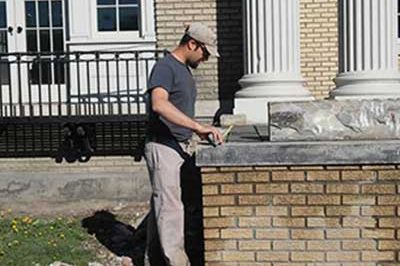
During his teenage years, he spent most summer vacations working in the construction trade, toiling with his hands to build stone walls, patios and fireplaces, which gave people not only something they wanted, but something they could truly enjoy and appreciate about their home.

After high school Darder went off to Syracuse University, where he earned a degree in Civil Engineering. This taught him a lot about the trade which he had worked during his high school years, including valuable knowledge in structural design, frost heave, surveying, soil and stone properties and drainage control. He landed a great job in Westchester County after graduation but something was calling him back to the hills of the Catskills — and the stone and quarries which he had grown up with.

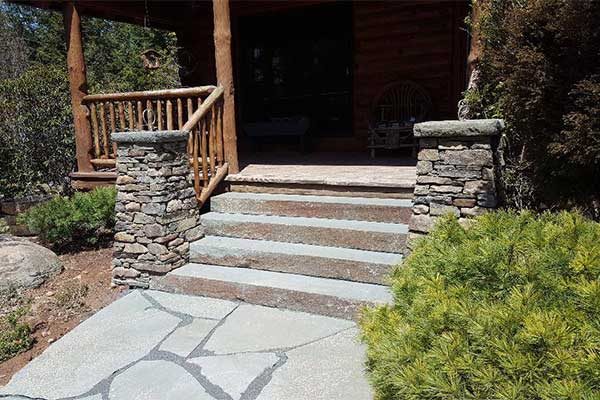
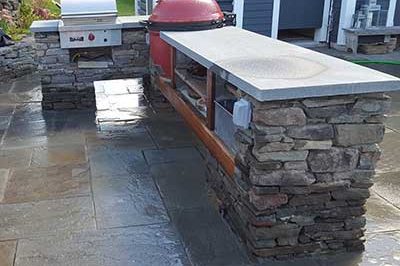
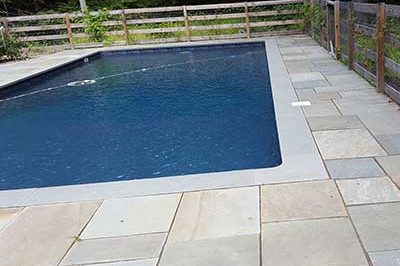
Today, Darder Stone Works focuses on residential and commercial stone construction, from fireplaces, patios, pool decks, steps, waterfalls, walkways, veneer and more. No job is out of reach of Darder with his experience, training — and imagination.

Of late, one thing that has come up frequently in his business are discussions revolving around using cultured or ‘real’ stone. “In the past couple years, I have had the opportunity to design and construct several stone fireplaces and in each preliminary meeting the client poses the same first question. ‘Should we use cultured stone or the native bluestone/fieldstone?,’ ” Darder said. “I tell my clients that there are pro’s and con’s with both. However, financially they both basically cost the same, with sometimes a difference of up to 10 percent depending on the size and material type.” Darder’s answer to his clients is simple. “Chose the material that you want.” Darder Stone Works is comfortable working with both cultured and the native stone of the Catskills, but it seems that each time the client mentions “cultured” they expect a huge advantage; however, this is not always necessarily true.

“An advantages with cultured stone is that the client can specifically choose exactly what shape, color and finish they want at basically the same price,” he said. “This allows the client to choose from a wide range of stones that are found all over the country and basically mimic that product without actually shipping and handling the real thing. “Another advantage is that cultured stone weighs less, in the event that weight is an option during design,” he said. “As far as product goes, Owens Corning manufactures the best cultured stone on the market, almost too good, which gives the masons no true advantage in building with it, as all the pieces are so different in shape and size much like that of real stone,” Darder said.

“In my experience there are only a few disadvantages in choosing cultured stone. Owens Corning manufactures all of its cultured stone in one place, Oregon,” he said. “And the cost to ship this heavy product across the country can add up. So the same project out west will be more affordable over one in New York. “Cultured stone also doesn’t supply very attractive sills, mantels, or hearths with are usually focal points of the project. But in my view, the biggest disadvantage of all…it’s not real,” he said. Native bluestone and fieldstone has its advantages and disadvantages as well. Darder likes the fact that it is local, so shipping and handling costs are quite modest compared to that of natural, imported stone. “It also fits the landscape,” he said. “It is much more natural to see a fireplace constructed out of the natural stone of the area, whether it is in New York or New Mexico. “Also when working with the native bluestone, there are many custom design options available concerning the finishes and textures of the mantels, hearths and supports. Disadvantages of native stone is that it weighs more and takes up more space,” he said.

But no matter your preference, both types have the potential to enhance your living area and provide a lifetime of satisfaction. And Darder is happy that most customers have stayed true to their roots here in Sullivan County and he has seen more natural, native stone fireplaces than that of cultured. “I believe it will stay that way for at least the next generation,” he said.

To reach Forest Darder you can contact him at Darder Stone Works, Inc. 845-744-6642 or visit him on the web at www.darderstoneworks.com


Copyright 2006 © Darder Stone Works. All rights reserved.